‘And the men of Israel turned back against the people of Benjamin and struck them with the edge of the sword, the city, men and beasts and all that they found. And all the towns that they found they set on fire’ (Judges 20:48).
Some years back I received a letter from the Christian institute. The Home Secretary had decided that Asbo’s were not an effective deterrent to stop re-offending. So the proposition was to introduce a new bill based on people causing annoyance. On this basis someone could see me on the High Street, doing evangelism and could go up to the nearest policeman and say “that guys really annoying me.” Not surprisingly the bill was quickly dropped. The police and magistrates didn’t want it as it was a badly conceived. Any charge would be almost impossible to prove as it was so subjective! But it shows the danger of a knee jerk reaction, which is what we encounter in this chapter of Judges.
After the shocking events of chapter 19, there’s a feeling that something ought to be done about the wickedness of the men of Gibeah. So: ‘all the people of Israel came out, from Dan 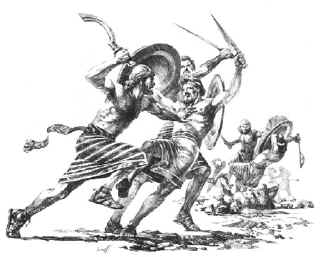 to Beersheba, including the land of Gilead, and the congregation assembled as one man to the Lord at Mizpah. And the chiefs of all the people, of all the tribes of Israel, presented themselves in the assembly of the people of God, 400,000 men on foot that drew the sword’ (vs1-2). The Levite gets to tell his story, putting himself in the best light by omitting certain unfavorable details (vs4-8). Israel means business, it’s blood is up as they all feel the men of Gibeah must pay for what they have done (vs8-11). But no one is thinking clearly. On the good side, Israel is united and has come before the Lord. The bad side is they haven’t consulted him! Mob justice will get things done, but the question is will they be done in the right way? After all, not all unity is good unity!
But there’s an additional problem, not everybody is on board with this. When the men of Israel approach the tribe of Benjamin, they won’t play ball! Verses 12-17 have a sinister tone to them. The language Israel uses is undiplomatic leading to the Benjamites dismissing it. The tension in the text escalates with its description of the military prowess of the tribe of Benjamin.
But then Israel does something right by inquiring of the Lord. However, they then spoil it by ignoring the Lord’s command that: “Judah shall go up first” (v18) by deciding they will all go altogether. The result is Israel gets a major whipping for their presumption (vs19-22)! It may seem strange that the Lord allows them to go up against the Benjamites again (v23), but the point the text is making is Israel has already made-up its mind and their approach to the Lord is purely to get a spiritual sheen on their actions rather than seek his will in prayer. So, once again, they suffer defeat for the second time on a catastrophic level (vs24-26)!
Finally, Israel does the right thing. ‘Then all the people of Israel, the whole army, went up and came to Bethel and wept. They sat there before the Lord and fasted that day until evening, and offered burnt offerings and peace offerings before the Lord. And the people of Israel enquired of the Lord (for the ark of the covenant of God was there in those days, and Phinehas the son of Eleazar, son of Aaron, ministered before it in those days), saying, “Shall we go out once more to battle against our brothers, the people of Benjamin, or shall we cease?” And the Lord said, “Go up, for tomorrow I will give them into your hand” (vs26-28). This time the attitude is right as they humble themselves, seeking the Lord’s direction, which he now gives them in definite terms.
Two accounts of the battle follow, the second one being more detailed (vs29-48). Israel is victorious as the Benjamites suffer overwhelming defeat. But there’s a small detail we could easily miss. In verse 35 we read: ‘And the Lord defeated Benjamin before Israel, and the people of Israel destroyed 25,100 men of Benjamin that day.’ Israel had been disobedient, but the Lord was still achieving his purpose through them despite this. This spiritual malaise is typified by the mention of Phineas the priest. He’d made such an impression with his zeal for the Lord during the exodus (Numbers 25:6-15), and was commended for it, but he’s strangely silent here making us wonder if he’d lost the zealousness he showed as a younger man?
In the end, no one comes out of this very well. There’s huge losses on both sides. The thriving tribe of Benjamin is reduced to 600 men! So one can’t help think that the Lord is judging Israel, because Benjamin is harboring those who committed horrendous immoral acts, and Israel is suffering from a major spiritual malaise. This reminds us the church in any day and age can be subject to judgement when they depart from scripture. ‘For it is time for judgement to begin at the household of God; and if it begins with us, what will be the outcome for those who do not obey the gospel of God?’ (1 Peter 4:17).